
Rafi Auto Rice Mills: Putting an East–West Rooftop to Work
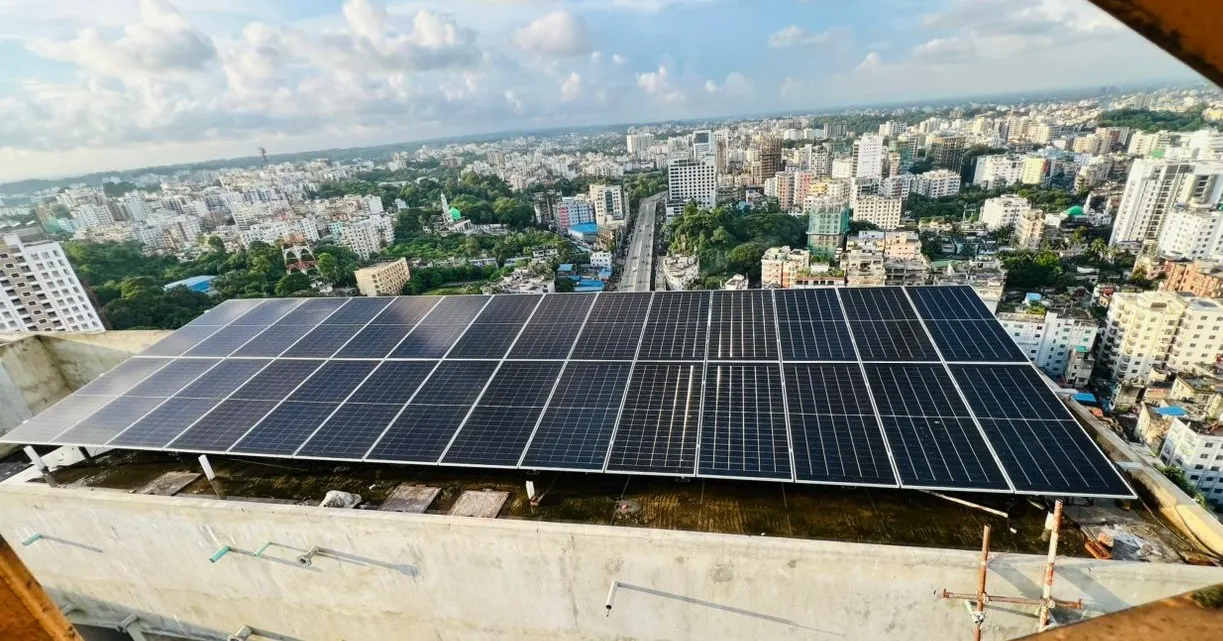
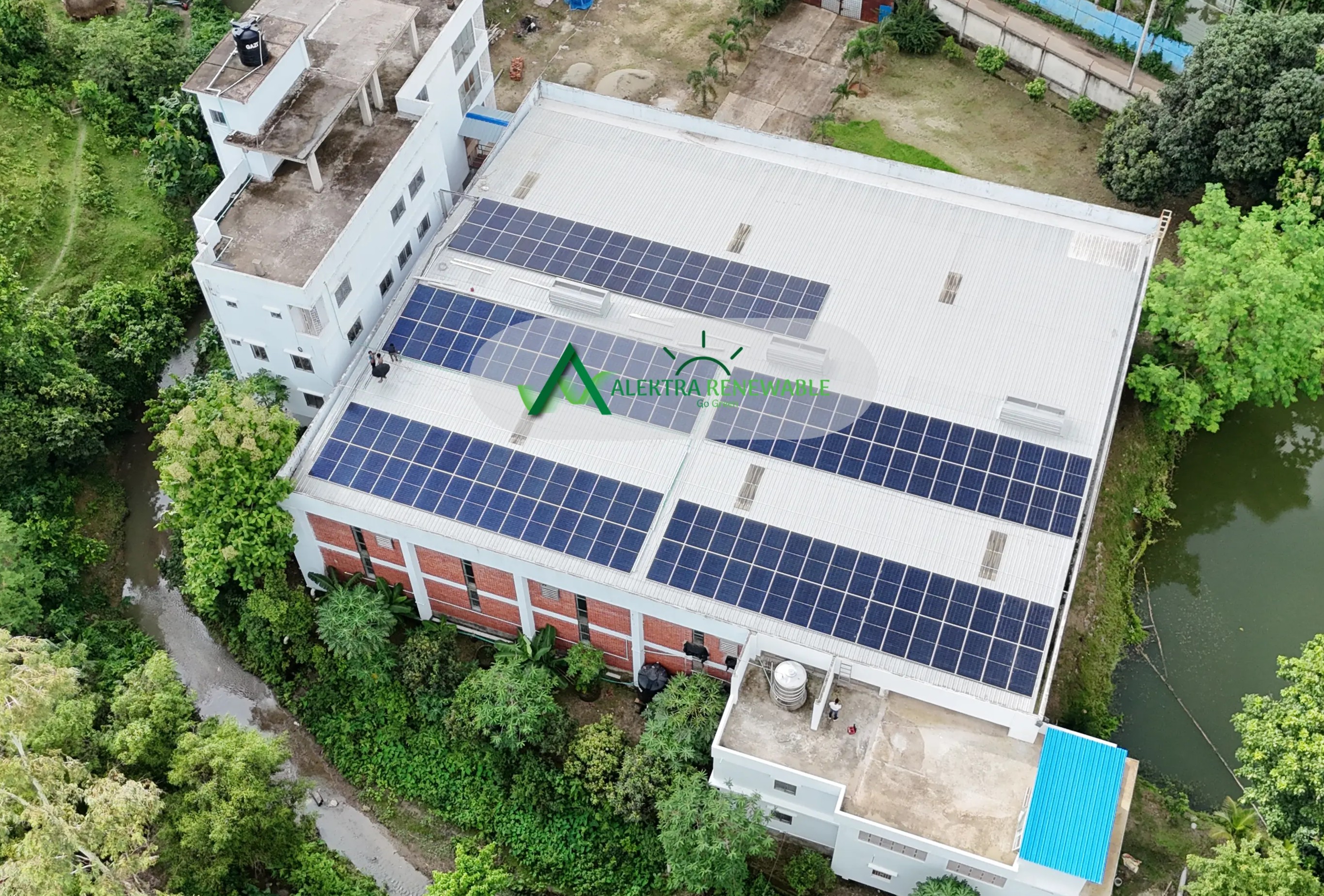
For Rafi Auto Rice Mills in Brahmanbaria, Bangladesh, rooftop solar provides an opportunity to produce electricity close to where it is consumed. Alektra Renewable delivered a 70.725 kWp installation that uses the building’s east- and west-facing roof areas, with each orientation served by a dedicated 50 kW Solis inverter.
The project brings together 115 JA Solar modules, a combined inverter capacity of 100 kW AC and a long aluminum rail mounting system. Alongside electricity generation, the design addresses future array expansion, roof waterproofing and protection of solar cabling against rodents.
System at a Glance
ItemInstalled configurationClientRafi Auto Rice MillsLocationBrahmanbaria, BangladeshEPC contractorAlektra RenewableApplicationIndustrial rooftop solar for a rice millSystem typeGrid-connected solar PVSolar array capacity70.725 kWp DCSolar modules115 × JA Solar JAM66D45-615/LBIndividual module rating615 WInverters2 × Solis S5-GC50KCombined inverter capacity100 kW ACArray orientationEast and westInverter arrangementDedicated inverter for each orientationMountingLong aluminum railsInstallation provisionsRoof waterproofing and rodent protectionTwo Roof Orientations, Two Inverters
The roof layout shaped the electrical design. East-facing modules receive stronger direct sunlight earlier in the day, while west-facing modules contribute more strongly later in the afternoon. Combining both orientations can spread generation across a broader daytime window, depending on roof tilt, shading, and local weather.
At Rafi Auto Rice Mills, the east and west arrays feed separate Solis S5-GC50K inverters. This arrangement gives each roof orientation its own power-conversion unit and allows operating performance to be assessed by roof side.
For a facility with electricity demand across the working day, the timing of solar production matters alongside the annual energy total. How much generation is consumed directly will depend on the mill’s actual operating schedule and load profile.
Indicative Annual Electricity Production
For preliminary planning, an assumed specific yield of 1,270 kWh/kWp/year gives the existing array an estimated annual output of approximately 89,821 kWh, or 89.8 MWh.
Generation indicatorPlanning estimateAnnual solar electricity89,821 kWhAverage monthly generation7,485 kWhAverage daily generation across the year246 kWhThese averages provide an indication of scale; production will vary between seasons and individual days. An assessment using the actual east–west tilt, shading and string layout would refine the estimate.
Solar electricity used within the mill can reduce electricity purchased from the grid. Any surplus generation and its financial value will depend on the approved export arrangement. Savings should therefore be assessed against the facility’s consumption data and applicable electricity tariff.
Environmental Impact in Everyday Terms
Using the estimated annual generation and a reference grid emission factor of 0.62 kg CO₂/kWh, the installation could help avoid approximately 55.7 tonnes of grid-related CO₂ emissions each year.
The reference factor is the value for Bangladesh’s fiscal years 2020–21 and 2021–22 communicated by the Department of Environment in January 2025. Bangladesh Department of Environment: Grid Emission Factor
That annual carbon benefit can be illustrated through several equivalents:
ComparisonEquivalent to approximatelyTree carbon absorptionAverage annual CO₂ uptake of 930 growing urban treesCoal combustion emissionsCO₂ released by burning 28 tonnes of coalLong-haul passenger travelDirect CO₂ emissions from 68 one-way passenger journeys of 5,000 miles eachThe tree comparison uses an average uptake of 60 kg CO₂ per tree per year over a ten-year growth period. The coal comparison uses approximately 1.98 tonnes CO₂ per tonne of coal. These are illustrative benchmarks based on US EPA equivalency calculations, rather than a count of trees planted or a measurement of coal physically displaced.
The travel comparison uses 0.163 kg CO₂ per passenger-mile for a 5,000-mile journey, approximately 8,047 km. It represents individual passenger journeys and excludes aviation’s additional non-CO₂ warming effects. US EPA 2025 Emission Factors, Table 10
All three comparisons express the same estimated emissions benefit and are not additive.
Space to Expand the Solar Array
The two 50 kW inverters provide a combined 100 kW AC capacity, exceeding the initial 70.725 kWp module capacity. This selection leaves scope to increase the solar array as the client’s requirements develop.
At an overall DC-to-AC ratio approaching 1.25, a total of 203 modules rated at 615 W would provide 124.845 kWp. Compared with the existing 115 modules, this represents a potential addition of 88 modules, or 54.120 kWp.
For this installation, expansion must be checked separately for each inverter. Spare capacity on one inverter does not automatically accommodate additional modules connected to the other. The final east–west allocation must satisfy each unit’s voltage, current, and MPPT limits, alongside roof loading, space, cabling, and protection requirements.
The 88-module figure is therefore an overall capacity-planning allowance, subject to a finalized expansion design.
Roof Integration and Cable Protection
Long aluminum rails provide the mounting arrangement for the solar modules across the roof areas. Waterproofing measures were incorporated at the relevant mounting interfaces to help protect the building against water ingress.
Rodent protection was also included for the electrical installation. Protecting cable routes helps reduce the likelihood of insulation damage, electrical faults and avoidable interruptions—practical concerns for a system expected to serve an operating industrial facility.
Inspection of roof seals, mounting connections and cable protection should remain part of routine maintenance.
A Rooftop Asset for the Mill’s Future
Rafi Auto Rice Mills now has 70.725 kWp of installed solar capacity arranged around its east–west roof layout. With separate inverters serving the two orientations, the installation combines on-site electricity generation with a clear basis for assessing performance and planning future additions.
The project demonstrates Alektra Renewable’s approach to industrial rooftop solar in Bangladesh: adapting the electrical arrangement to the building, accounting for operating conditions and allowing the installation to grow with the business.
Estimation Basis
Energy and environmental figures are preliminary projections using an assumed yield of 1,270 kWh/kWp/year, not monitored results or an orientation-specific simulation. Actual output depends on weather, shading, roof geometry, cleanliness, system losses, grid availability, and export restrictions. Avoided CO₂ assumes solar generation displaces grid electricity at the stated reference factor; it excludes equipment lifecycle emissions and does not represent certified carbon credits.